


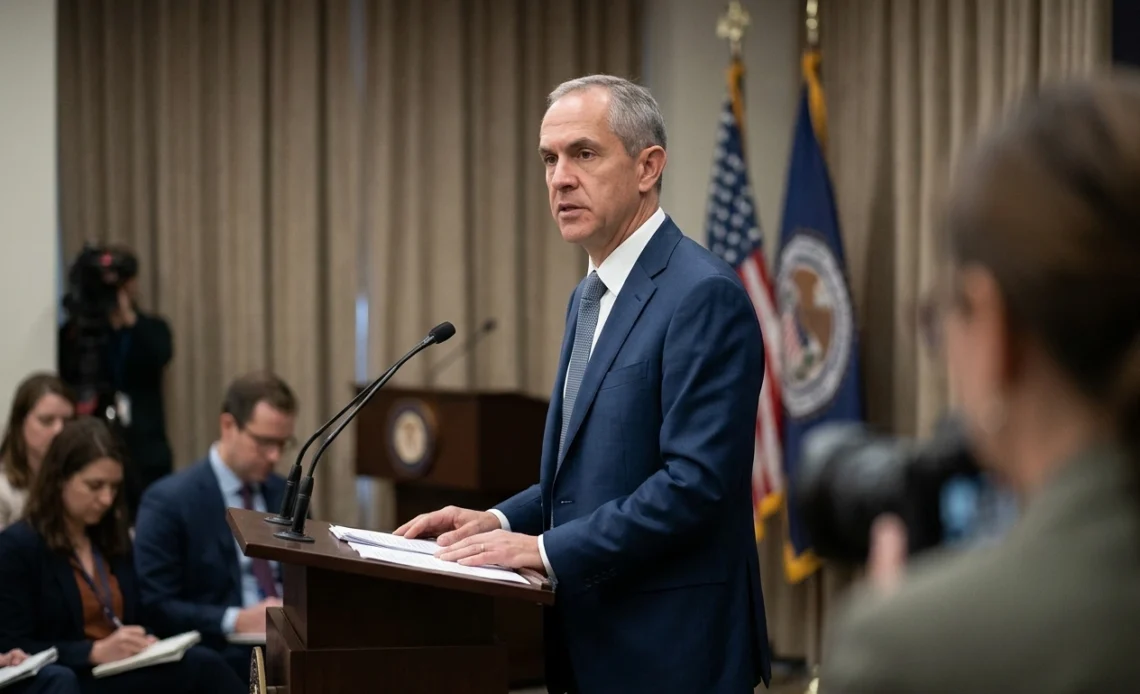
the fight against inflation is far from over, and a more aggressive monetary policy stance may be required before the year closes. In a series of pointed remarks, Waller outlined a scenario where a standard quarter-point rate hike in December might not go far enough, explicitly putting a half-point (50-basis-point) increase on the table.
The core of Waller’s hawkish pivot stems from what he flatly described as “bad” inflation data in September. The central bank is no longer just looking at headline numbers; the primary concern is the breadth of the price increases across the economy.
The Federal Reserve’s dual mandate requires balancing price stability with maximum employment. Right now, the strength of the latter is giving the Fed the exact runway it needs to tackle the former.
Waller noted that the U.S. labor market remains remarkably solid, with supply and demand roughly in balance and employment hovering very close to the Fed’s ultimate goal. While he suspects that Gross Domestic Product (GDP) growth is slightly backing off in the current quarter, he remains confident that overall economic output will continue to grow at a solid, sustainable pace.
This resilience means the Fed has the “policy room” to tighten financial conditions without the immediate fear of triggering a severe economic contraction.
Markets should not misinterpret the Fed’s recent willingness to hold rates steady as a pivot. Waller was willing to wait on policy tightening in October, but he clarified that this was a tactical pause rather than a change in direction.
However, Waller emphasized that the promised hikes must still be delivered within a reasonable period. Even if the October CPI data shows marginal improvement compared to September’s dismal print, Waller remains steadfast in his support for at least a standard quarter-point (25 bps) hike in December.
