


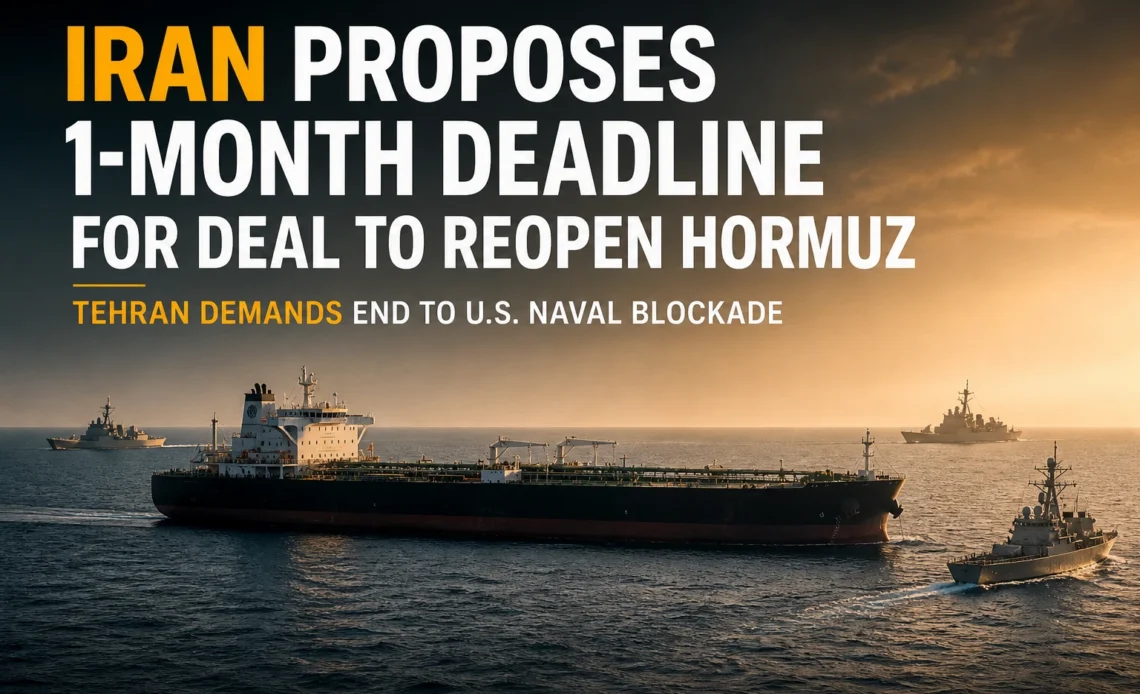
Global markets are once again on edge after Iran proposed a time bound deal to reopen the Strait of Hormuz, one of the world’s most critical energy chokepoints.
According to reports from Axios, Tehran has put forward a 1-month deadline to reach an agreement but with a key condition:
The United States must first end its naval blockade.
Key Developments
Iran’s proposal includes three major elements:
- 1-month deadline to finalize a deal
- Immediate reopening of the Strait of Hormuz if terms are met
- Demand to lift the U.S. naval blockade on Iranian linked shipping
Taken together, this signals a clear strategy:
Iran is pushing for a fast, limited agreement focused on de-escalation not a full political settlement.
A “De-Escalation First” Strategy
Instead of tackling complex issues like the nuclear program, Iran appears to be prioritizing:
- Restoring oil and shipping flows
- Reducing military pressure in the Gulf
- Stabilizing short term economic conditions
This approach reflects a tactical shift:
Fix the immediate crisis first negotiate the bigger issues later.
Why the U.S. Blockade Matters
At the center of the proposal is the ongoing U.S. naval blockade, which has reportedly involved:
- Intercepting vessels linked to Iranian oil trade
- Increasing military presence in and around the Gulf
- Tightening enforcement of economic sanctions
For Iran, lifting this blockade is non negotiable.
No blockade removal = No reopening of Hormuz
Why This Matters for Global Markets
1. Hormuz Is the World’s Energy Lifeline
The Strait of Hormuz handles nearly:
- 20% of global oil shipments
- A major portion of LNG exports
Any disruption here can immediately impact:
- Oil prices
- Shipping costs
- Global supply chains
2. A High-Stakes Power Play
This situation is shaping into a strategic standoff:
- U.S. → Using military and economic pressure
- Iran → Using control over a critical chokepoint
Both sides are leveraging their strongest assets
3. A Tight Deadline Increases Risk
The 1-month timeline introduces urgency:
- Markets may react to every headline and update
- Risk of miscalculation or escalation increases
- Diplomatic failure could trigger sharp volatility
Policy Divide: Why a Deal Is Difficult
There is a clear mismatch in priorities:
| Iran’s Position | U.S. Position |
|---|---|
| End blockade first | Maintain pressure |
| Reopen Hormuz quickly | Demand broader concessions |
| Delay nuclear talks | Prioritize nuclear limits |
This gap makes a near term agreement uncertain
Final Thoughts
Iran’s proposal is not a full peace deal it’s a short-term pressure move.
By setting a deadline and tying it to the removal of the U.S. blockade, Tehran is attempting to:
- Force quick negotiations
- Ease economic pressure
- Regain control over its energy exports
However, with Washington maintaining a hardline stance, the path to agreement remains uncertain.
