


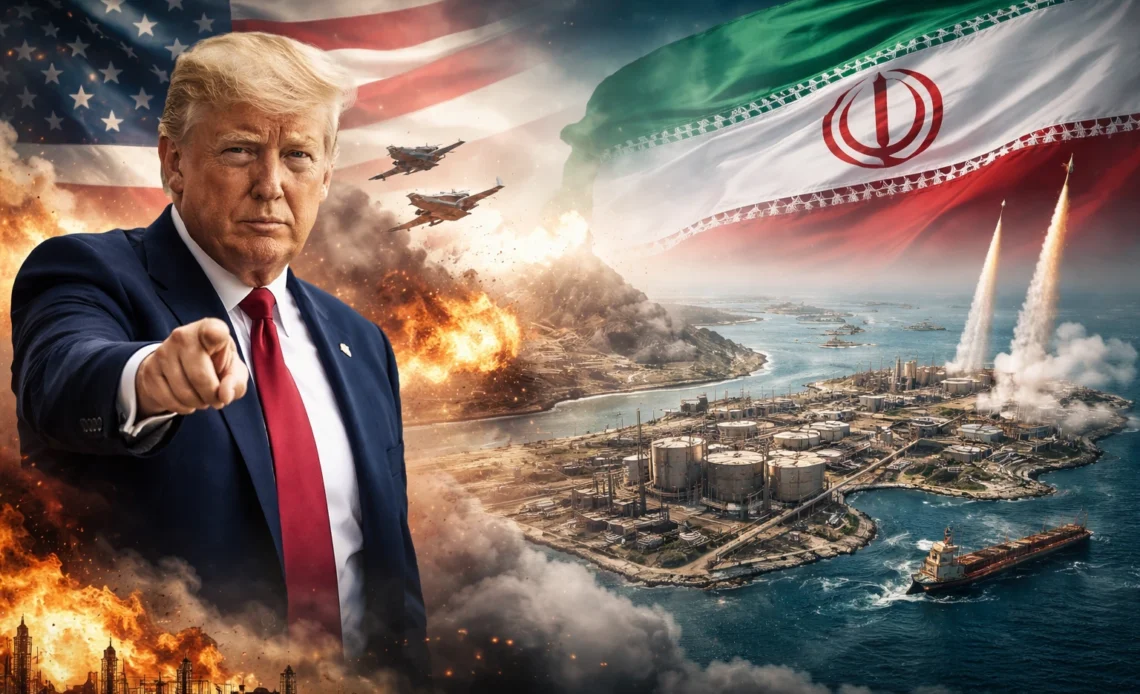
Tensions in the Middle East have escalated once again after U.S. President Donald Trump issued a strong warning to Iran. He stated that the United States could take direct military action against Iran’s oil infrastructure if the country fails to reopen the critical Strait of Hormuz without delay.
What Did Trump Say?
Trump’s message was clear and aggressive. He warned that if Iran does not agree to a deal and immediately reopen the Strait of Hormuz, the U.S. could target and destroy key Iranian assets, including oil wells, power facilities, and the strategic Kharg Island.
Why the Strait of Hormuz Matters
The Strait of Hormuz is one of the most important waterways in the world. Roughly one fifth of global oil supply passes through this narrow channel.
Any disruption in this route can:
- Send global oil prices soaring
- Disrupt international trade
- Increase economic uncertainty worldwide
Why Kharg Island Is a Key Target
Kharg Island plays a central role in Iran’s economy. It is responsible for handling the vast majority of the country’s oil exports.
If this facility were to be damaged or destroyed:
- Iran’s oil exports would collapse
- Government revenue would take a massive hit
- Economic pressure on Iran would intensify dramatically A Strategy of Pressure
Trump’s warning appears to be part of a broader strategy aimed at forcing Iran to act quickly. By threatening critical infrastructure, the U.S. is increasing both economic and military pressure.
This approach sends a clear message:
- Reopen the Strait and negotiate
- Or face severe consequences Conclusion
Conclusion
Trump’s warning underscores how fragile the current geopolitical landscape is. With the Strait of Hormuz at the center of global energy flow, any escalation could have far reaching consequences.
As tensions rise, the world waits to see whether diplomacy will prevail or if the situation will move closer to confrontation.
